What Is ICU-Level Home Care and When Do You Need It?
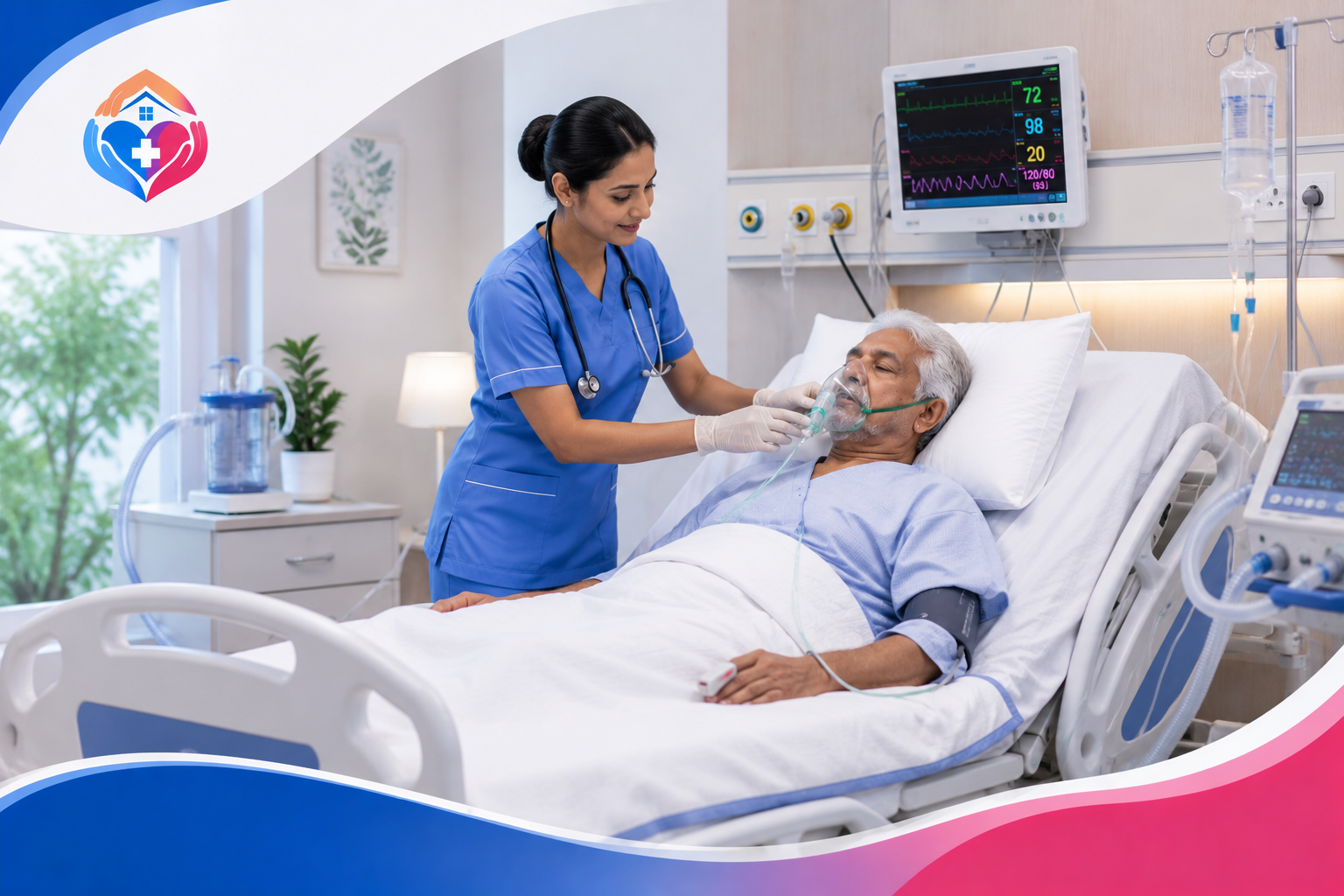
For patients who are critically ill or recovering from major health complications, returning home can feel like a distant dream. Historically, patients requiring mechanical ventilation, continuous vital monitoring, or active organ support had to remain hospitalized indefinitely. Today, clinical advancements have made it possible to set up a fully functioning intensive care environment directly in a patient's bedroom.
What Does an ICU Setup at Home Include?
To safely replicate a hospital ICU, several critical components must be integrated. These fall into three primary categories: advanced medical equipment, specialized critical care staffing, and standardized clinical protocols.
1. Advanced Medical Equipment
- Mechanical Ventilator / BiPAP: To assist or replace spontaneous breathing in respiratory failure.
- Multiparameter Monitor: Continuously monitors heart rate, blood pressure, electrocardiogram (ECG), oxygen saturation (SpO2), and temperature.
- Infusion & Syringe Pumps: Ensures precise, rate-controlled delivery of vital intravenous medications and nutritional support.
- Oxygen Concentrator & Backup Cylinder: Secures a steady flow of high-concentration oxygen.
- Suction Machine: Essential for airway clearance and preventing aspiration.
- DVT Pump & Air Mattress: Prevents deep vein thrombosis and pressure sores (bedsores) in immobilized patients.
2. Specialized Critical Care Staffing
Technological setups are only as good as the clinical minds operating them. A home ICU setup requires 24/7 monitoring by certified ICU-trained nurses under the supervision of a critical care specialist or pulmonologist. These nurses manage ventilator parameters, administer high-alert medications, coordinate tube feeds, and execute emergency protocols if vitals fluctuate.
When is Home ICU Care Needed?
Transitioning from a hospital ICU to a home ICU is considered when the patient's condition is stable but requires long-term clinical support. Common scenarios include:
- Neurological Conditions: Post-stroke recovery, spinal cord injuries, or progressive disorders like ALS where respiratory function is compromised.
- End-Stage Respiratory Diseases: Severe COPD or advanced lung pathologies requiring prolonged ventilator dependency.
- Severe Post-Operative Recovery: Following complex cardiothoracic, orthopedic, or abdominal surgeries where hospital stay recovery carries a high risk of hospital-acquired infections (HAIs).
- Palliative Care: Providing clinical support, comfort, and pain management in terminal stages within the familiar presence of family.
Preparation & Room Safety Protocols
Before installing ICU equipment, the home environment must undergo rigorous preparation. The selected room must have uninterrupted power supply (with dual power backup solutions), a designated hygienic hand-wash station, appropriate medical waste disposal bins, and absolute cleanliness to minimize the transmission of pathogens.